





OEM Brake Pad Friction Coefficients Explained: FF vs. GG Ratings for Global Markets
For global automotive parts distributors and brand owners, sourcing the correct brake pad friction formulation is not just about performance—it is a critical factor in market compliance, safety, and brand reputation.
A key metric in evaluating a brake pad’s performance is its friction coefficient. However, navigating the myriad of standards across different regions can be complex. This guide breaks down the science behind friction coefficients, heat fade, and material structures, helping procurement teams make data-driven sourcing decisions.
1. Decoding Edge Codes: Global Friction Standards (SAE J866)
The friction coefficient essentially measures the “grip” of the brake pad. A higher coefficient means a more aggressive initial bite and shorter stopping distances, but it requires advanced engineering to prevent excessive rotor wear, noise, and heat generation.
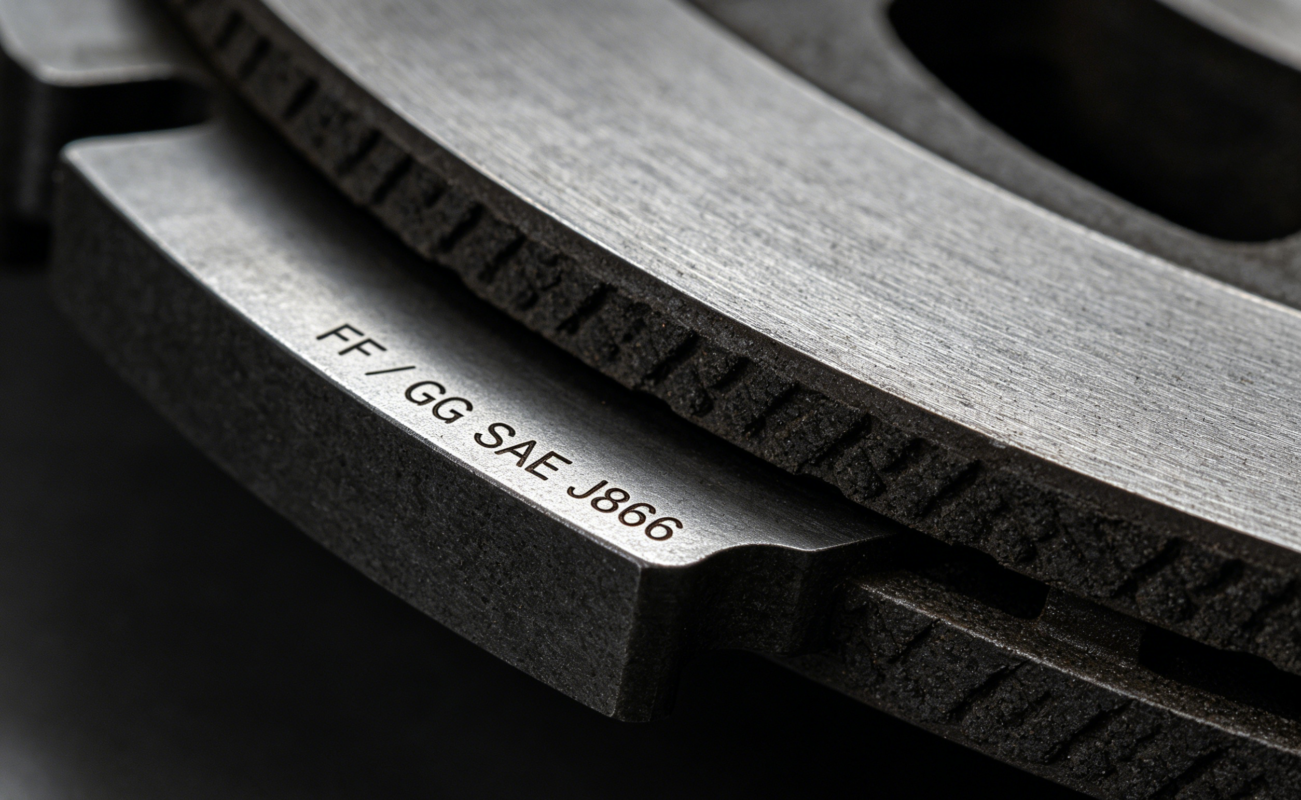
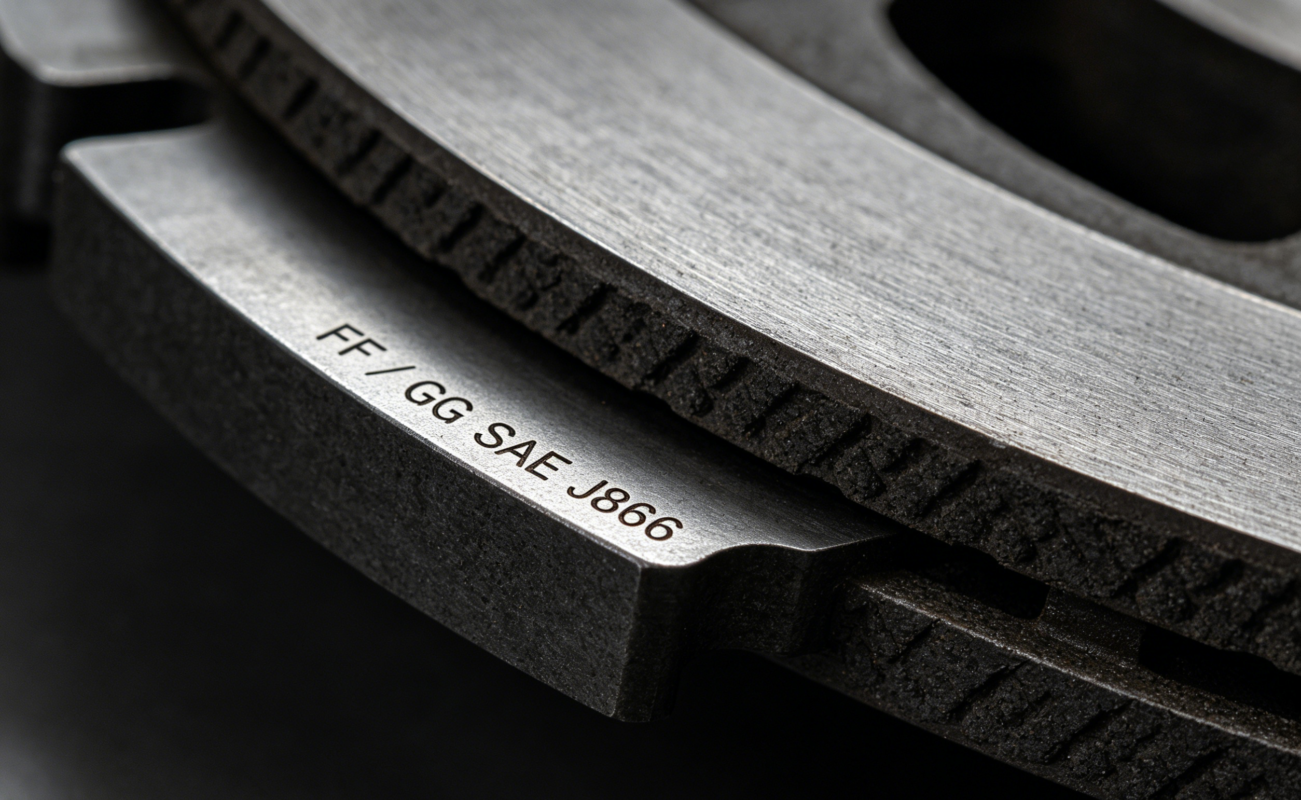
In the North American market, friction levels are standardized by the AMECA/SAE J866 protocol, which assigns a two-letter edge code (e.g., FF, GG) that is printed directly on the backing plate or friction material.
The First Letter: Represents the normal operating friction coefficient, measured across four points between 200°F and 400°F (93°C – 204°C).
The Second Letter: Represents the hot friction coefficient, measured across ten points up to 600°F (316°C), including the fade recovery cycle.
Common Friction Coefficient Classifications:
EE (0.25–0.35): Typically utilized for older or specific utility vehicles with larger pad surface areas.
FF (0.35–0.45): The global golden standard for passenger vehicles and premium OE replacement pads. It offers the optimal balance between stopping power, NVH (Noise, Vibration, and Harshness) control, and rotor longevity.
GG (0.45–0.55): Highly aggressive bite, specifically engineered to meet the rigorous demands of European vehicles and Autobahn driving conditions. These pads are highly relevant for distributors targeting ECE R90 (E-mark) compliance in the EU.
HH (0.55–0.65): Carbon-ceramic or heavy-metallic track formulations designed exclusively for racing applications, sacrificing cold-bite and acoustic comfort for extreme high-temperature stability.
2. Managing Heat Accumulation and Brake Fade
Braking is fundamentally the process of converting a vehicle’s kinetic energy into thermal energy. The efficiency of a brake pad is determined not just by how much heat it generates, but by how rapidly it can dissipate that heat.
When heat accumulation exceeds the thermal dissipation rate, the braking system experiences Heat Fade. This occurs when the pad’s core temperature surpasses the thermal limits of its structural resin matrix. Once this critical threshold is breached, the friction material begins to ablate or outgas, creating a microscopic layer of gas between the pad and the rotor that drastically reduces braking force.
Standard civilian brake pads are engineered to operate optimally within a 200°F to 600°F (93°C to 316°C) window. Quality OEM manufacturers must carefully calibrate the formulation to maintain consistent friction levels across this entire thermal band. While many low-end aftermarket suppliers claim extreme temperature resistance, material science dictates that standard phenolic resins begin to decompose rapidly above 716°F (380°C) without specialized modification.
3. Structural Integrity: The Anatomy of a Premium Brake Pad
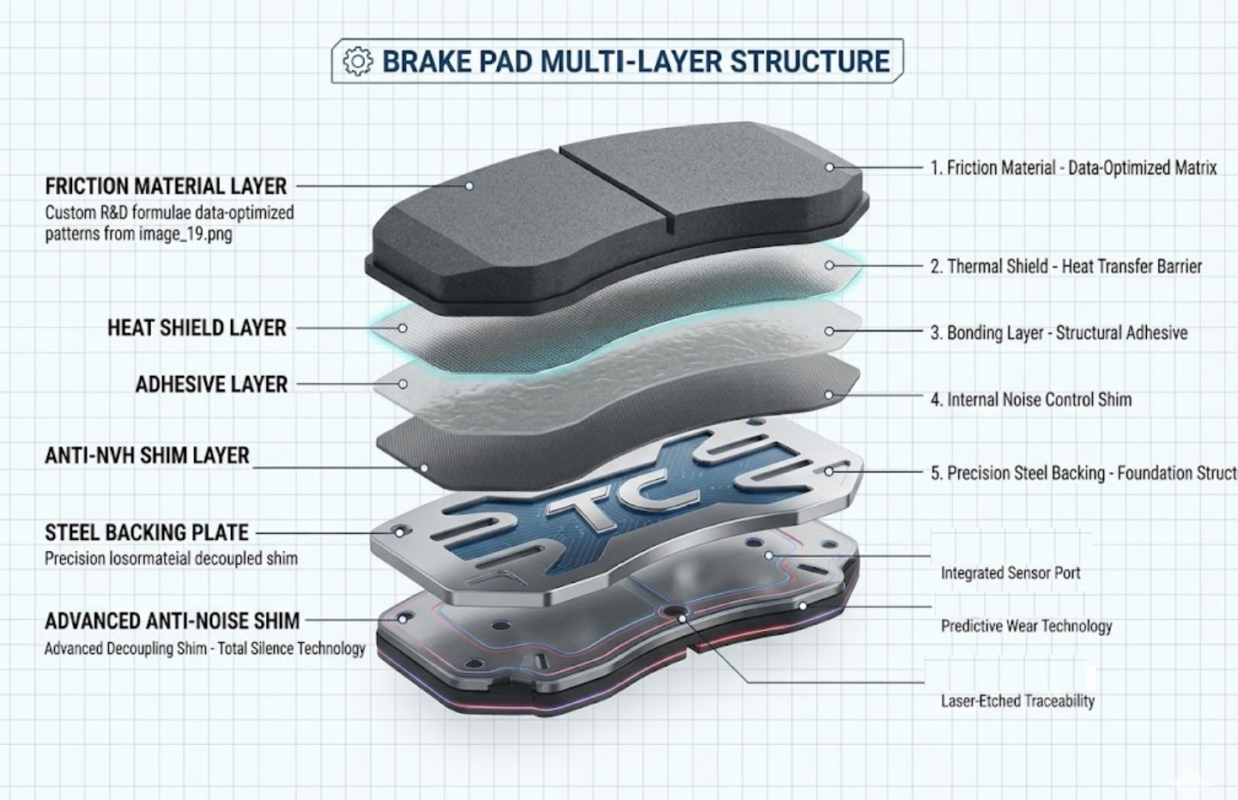
A premium brake pad is a complex composite structure consisting of three primary elements: the friction material, the structural resin matrix, and the backing plate assembly.
Advanced Friction Materials and Environmental Compliance
Historically relying on asbestos, modern OE-grade friction materials have evolved into three main categories: Semi-Metallic, Low-Metallic, and Ceramic.
For distributors targeting the North American market, regulatory compliance is paramount. Legislation in states like California and Washington mandates the phase-out of copper in brake pads due to aquatic toxicity. Sourcing Copper-Free Ceramic formulations (N Leaf Mark) is now a mandatory requirement for long-term market penetration in the US.
The Resin Matrix
Resin acts as the structural binder, keeping the microscopic friction fibers aligned and functional. Standard resins burn out at approximately 380°C (716°F). Once the resin fails, the fibers’ structural integrity collapses, resulting in immediate brake failure. To combat this, premium OEM formulations utilize heavily modified resins and specialized friction modifiers that push the degradation threshold beyond 480°C (896°F), ensuring stability even during sustained downhill braking.
Backing Plates and NVH Shims
The backing plate anchors the composite material. To survive extreme shear forces, premium pads utilize precision-stamped steel. Furthermore, high-end OEM/ODM manufacturers integrate premium multi-layer noise-damping shims. While budget manufacturers often omit shims to reduce costs, these components are absolutely critical for suppressing high-frequency vibrations and delivering the quiet, comfortable ride that modern consumers demand.
Source with Confidence: Partner with an IATF 16949 Certified Manufacturer
Developing a brake pad that perfectly balances the FF/GG friction coefficient, NVH characteristics, and regional environmental compliance requires robust R&D capabilities. From ECE R90-compliant semi-metallic pads for Europe to 100% Copper-Free ceramic formulations for North America, our independent testing laboratories ensure every batch meets the highest international safety standards.
 Account
 Categories
 Car filter
 Search
 Top
Top